Rebuild
Decluttering After a Life Change: What to Keep, Move, or Decide Later
Make one part of your home work for today without rushing decisions about meaningful belongings.
By Mel’s 2nd Act••2 min read
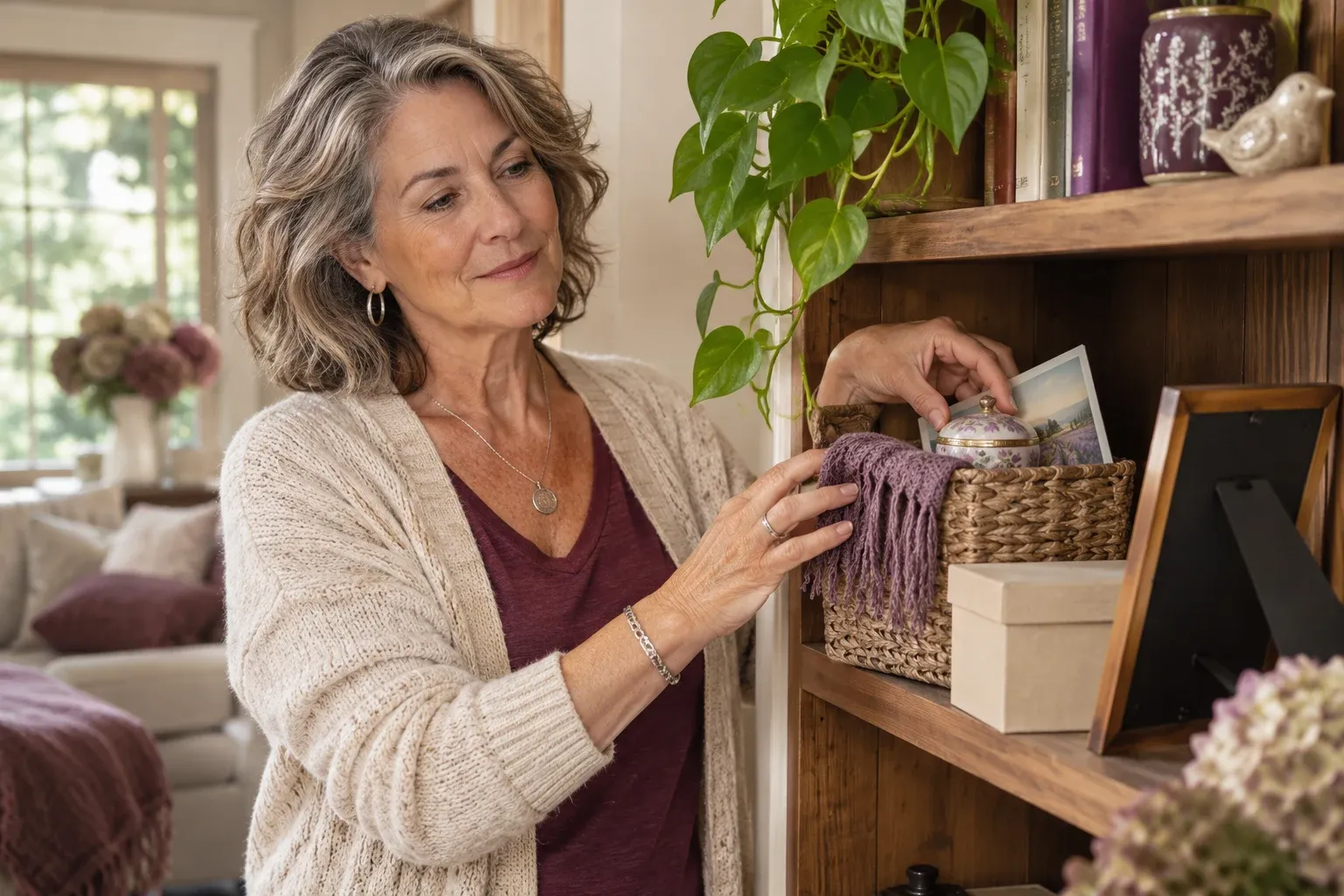
A home can keep serving an earlier version of your life long after your daily needs have changed. A desk may hold supplies for work you no longer do. A cupboard may be organized around a household that is now smaller. Changing those spaces does not require deciding what every object means.
Start with a practical question: What would make one part of today easier?
Choose a small working area
Select one drawer, one shelf, or the surface where you put your keys. Avoid beginning with a whole room or the most emotionally loaded collection. Decide what you want the space to do before removing anything.
For example, an entry shelf might need to hold the items you use when leaving home. That purpose gives you a reason for each decision without turning the task into a judgment about how much you own.
Use three temporary groups
Keep here: Items that belong in this space and serve its current purpose.
Move: Items that belong elsewhere in your home, belong to someone else, or may eventually leave the house. Moving something out of a drawer does not automatically mean donating it. Separate anything you do not own and ask before making decisions about it.
Decide later: Items that need information, a conversation, or more emotional space. Label the container with what remains unresolved. “Ask about ownership” is more useful than an unexplained box of uncertainty.
Keep identity documents, financial records, and other important papers out of a quick discard session. Their treatment needs its own informed decision.
Give the undecided group a boundary
Choose a specific place for pending items and a date to revisit them. The date is a reminder to look again, not a requirement to let something go. If you are not ready, write down why and choose the next appropriate step.
You can keep a meaningful object without displaying it every day. You can also change how something is stored while retaining the memory attached to it. Neither choice has to happen during this session.
Finish before expanding
Return the keep-here items, put relocated belongings in their intended places, and leave the working area usable. If you decide to donate something, confirm the recipient accepts it before creating another waiting pile.
Stop at the boundary you chose. A finished shelf is a useful result even when the rest of the house remains unchanged. For a repeatable way to keep track of later decisions, use three simple organizing methods.
Today’s small step
Choose three low-stakes items. Decide whether each stays, moves, or waits; leave sentimental decisions for another day if needed.
Keep it small enough for your time, energy, and budget. Pausing or choosing another day is an option.
Print a simple next-step checklist · Find another starting point